OTH mark Where OTH Began

R&D Project

Aerial Ignition
Impact Flare.

A drone-deployed, impact-initiated incendiary payload developed for a customer with a specific aerial ignition requirement. The device had to be small enough for a commercial drone, reliable enough to initiate at ground impact, and capable of producing sustained ignition temperature. This project is where OTH LLC began.

Customer identity is not disclosed.

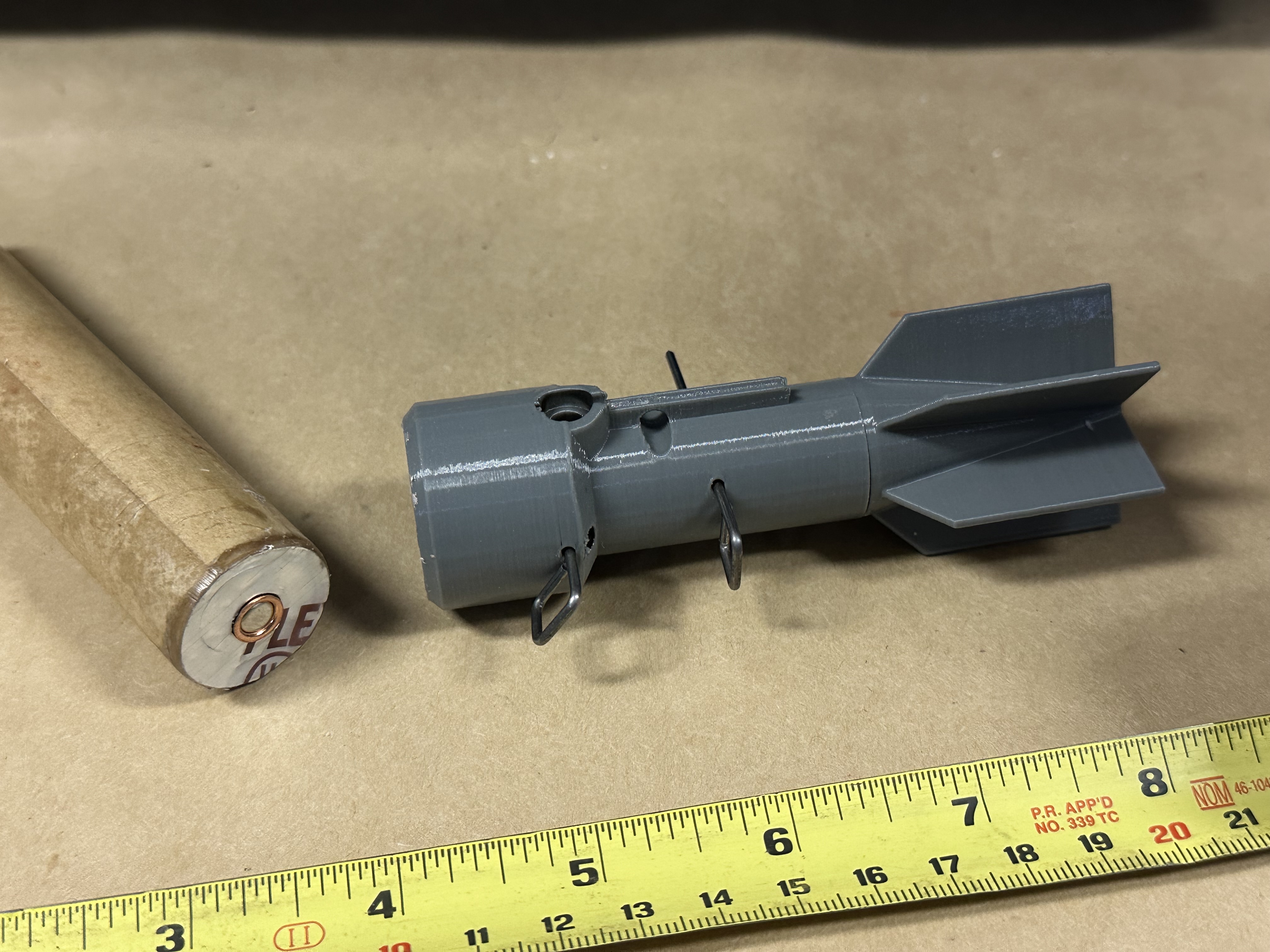
AIIF device with scale reference

Burn Temperature

4,000°F

Sustained incendiary output capable of igniting target materials on contact

Burn Duration

20+ sec

More than sufficient dwell time to initiate sustained ignition

Initiation

Impact

Inertial impact initiation — no electrical connection required

Deployment

Drone

Designed for deployment from a small commercial UAV platform

Housing

3D Printed

Fin-stabilized printed tail section — simple, low cost, field-replicable

The Problem

A Customer Needed Fire.
Delivered From the Air.

The requirement was specific — a payload that could be carried and released by a small commercial drone, survive the drop, initiate reliably at ground impact, and produce enough sustained heat to ignite target materials.

No electrical connections. No complex fuzing. Simple, low-cost, repeatable. The kind of problem that looks straightforward until you start working through the physics of impact initiation, burn rate, and payload geometry at small scale.

OTH solved it. The result was a fin-stabilized, impact-initiated incendiary device that burns at 4,000°F for more than 20 seconds — enough time to do the work it was designed to do.

The Approach

Simple Methods.
Effective Results.

The initiation system uses simple inertial mechanics — no electronics, no batteries, no signal required. The device arms during flight and initiates on contact with the ground. Reliability comes from the physics, not from complexity.

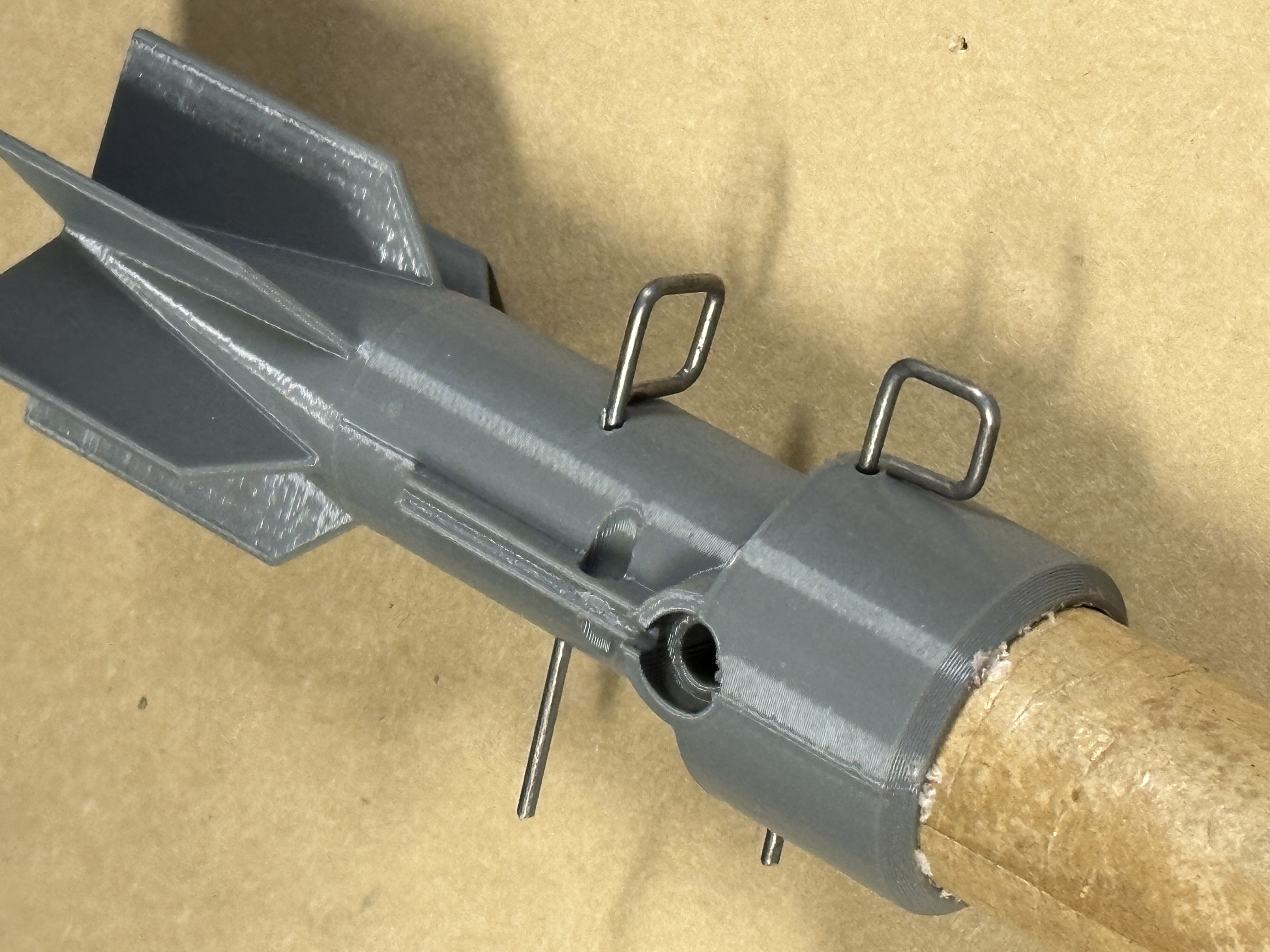
The housing was 3D printed — fin-stabilized for consistent nose-down orientation during drop. Safety pins prevent inadvertent initiation during handling and deployment. The incendiary payload was selected and sized to meet the burn temperature and duration requirements within the weight and volume constraints of the target drone platform.

This project established the OTH approach to R&D — iterate, test, refine. Build what works, not what looks good on paper.
The Device

Build & Detail

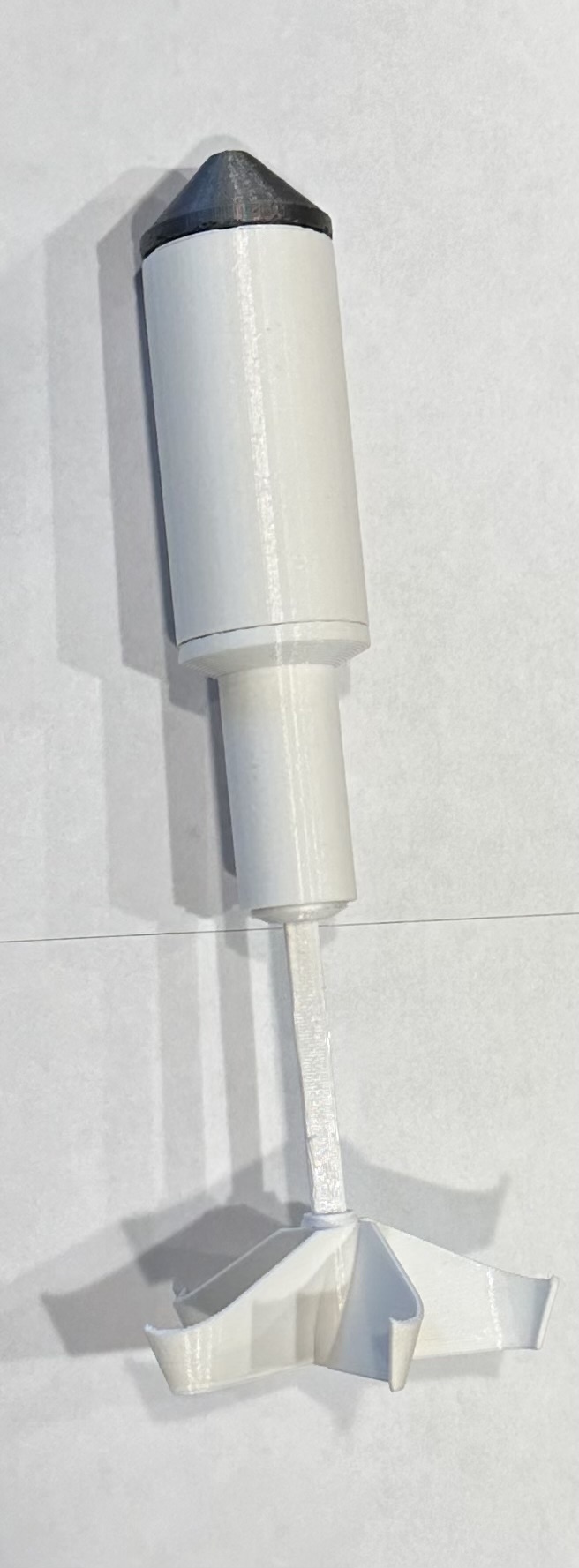
3D printed tail section with safety pins

3D printed fin housing — safety pins installed

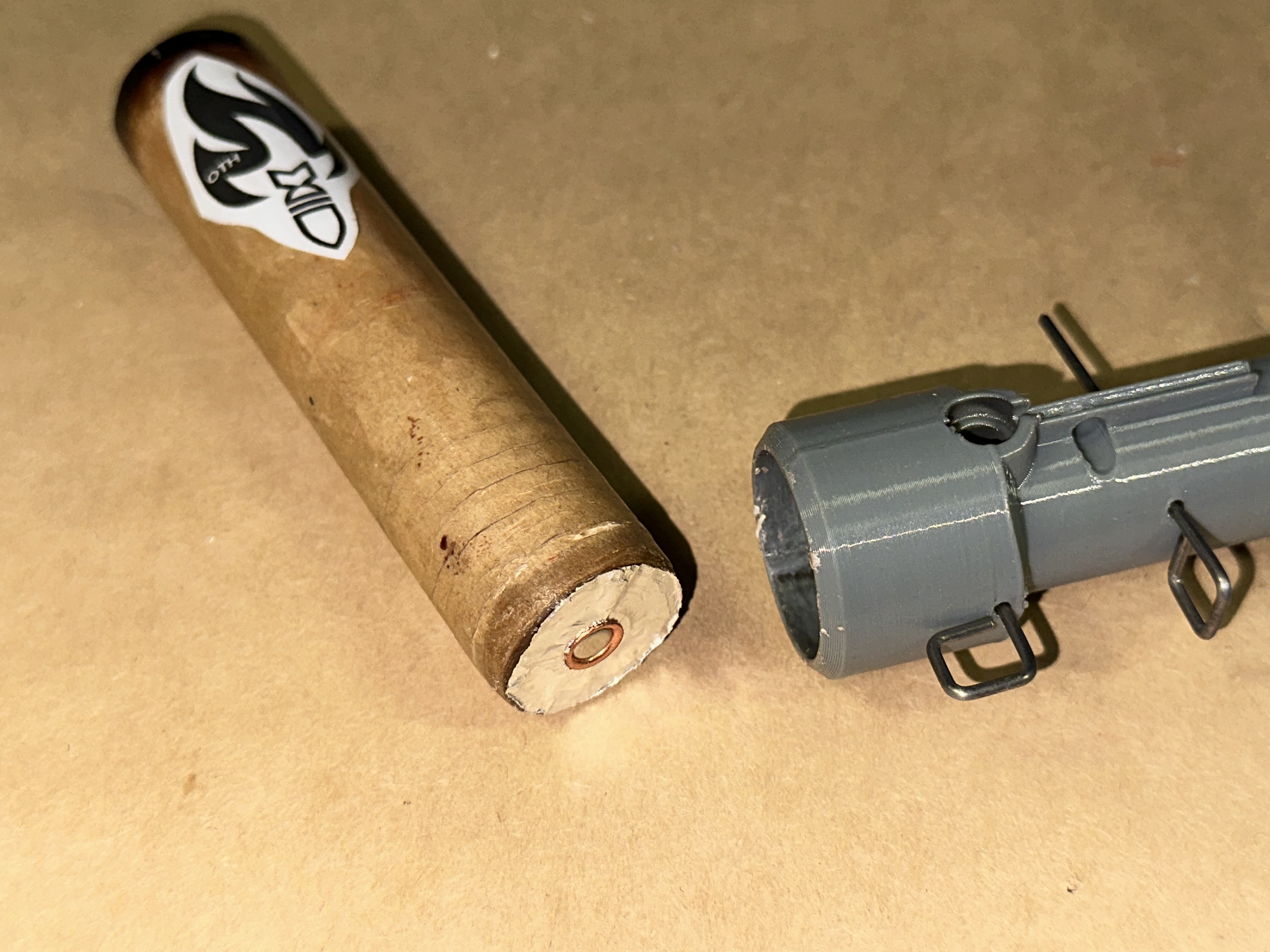
Incendiary payload with OTH mark

Incendiary payload — OTH mark applied

White model for fuze development

Early white model — fuze development prototype

Night Drop Test

Night Initiation

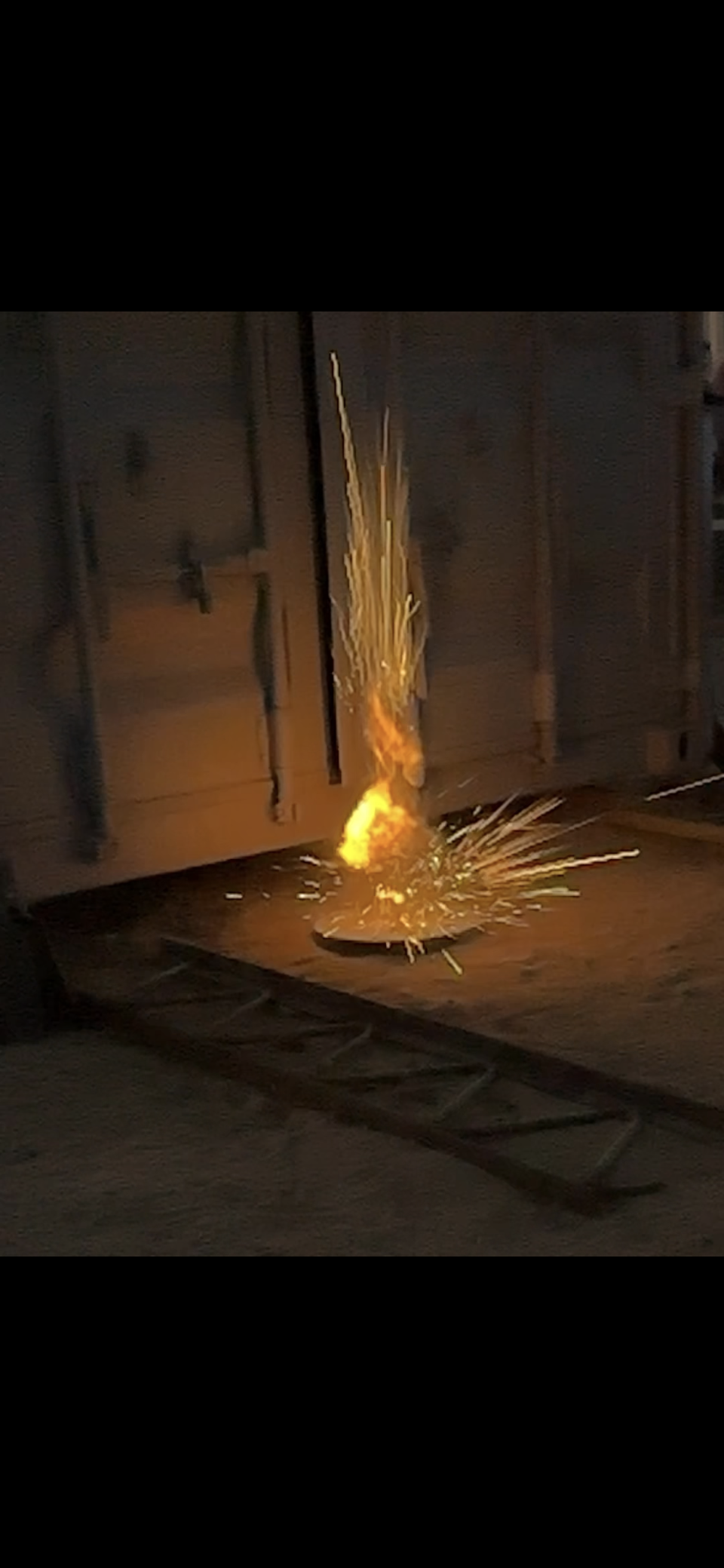
Night initiation drop test

Night drop test — impact initiation

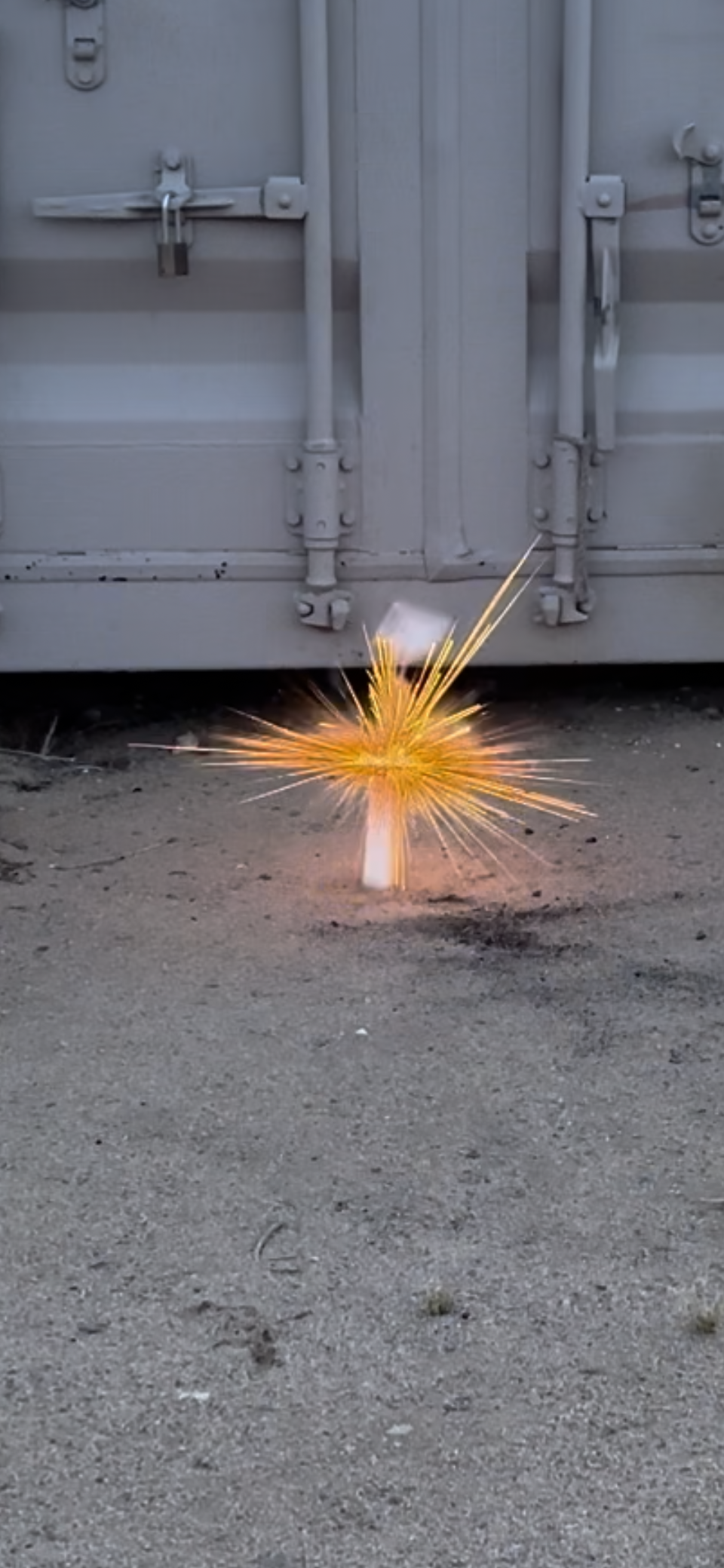
Drop tests conducted at night to clearly observe the initiation event and burn characteristics. The flash at impact confirms reliable inertial initiation.

Mod 2

Second Generation

Triangular Configuration.

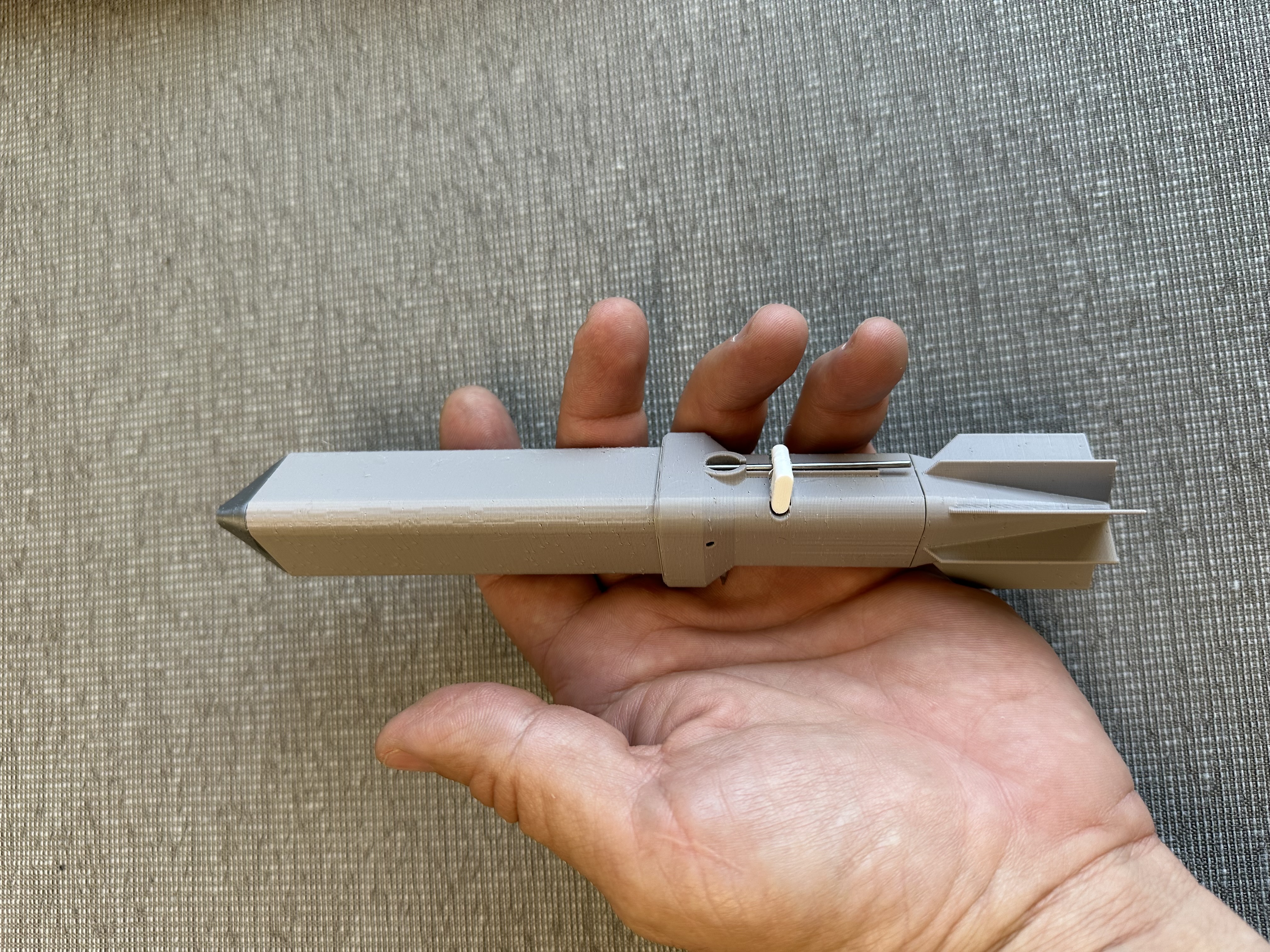
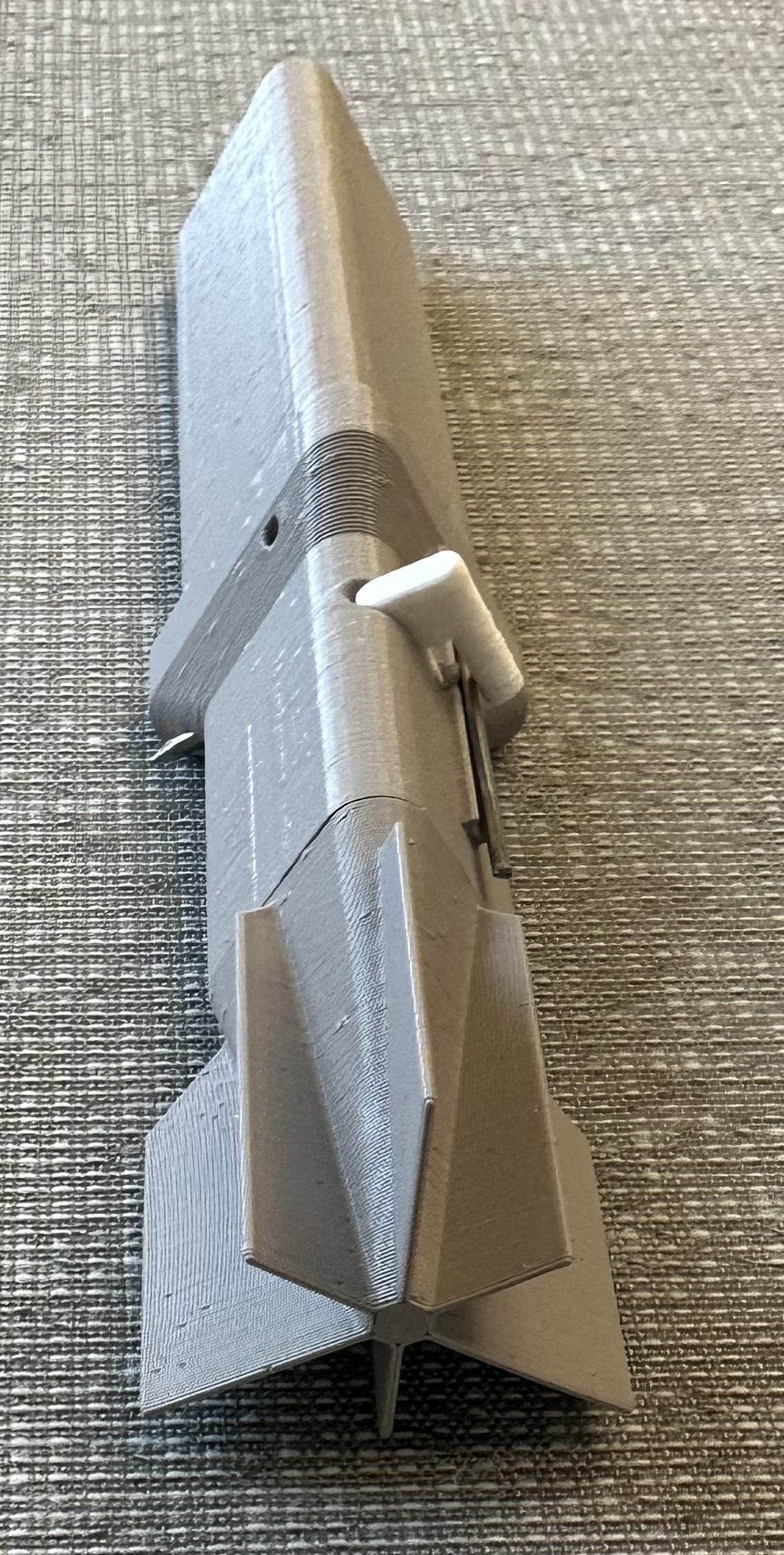
The second iteration of the AIIF explored a triangular cross-section payload geometry. The goal was to maximize the use of physical space within the drone's deployment mechanism — fitting more incendiary material into the same volume constraint.

The triangular form factor allows tighter packing in multi-unit deployment configurations and provides a different surface-area-to-mass ratio for ignition performance testing.

Iteration is the process. Each generation answers a question the last one raised.

Mod 2 triangular flare in hand for scale
Mod 2 triangular flare rear view

Ground Test — Impact Initiation

It Works.

Ground impact test — the device initiates on contact and produces immediate incendiary output. The starburst pattern at ground level is the initiation event. What follows is 20+ seconds of 4,000°F burn.

Impact initiation starburst

Have a Similar Requirement?

OTH develops custom energetic solutions for specific customer requirements. Reach out and let's talk about what you need.

Contact OTH